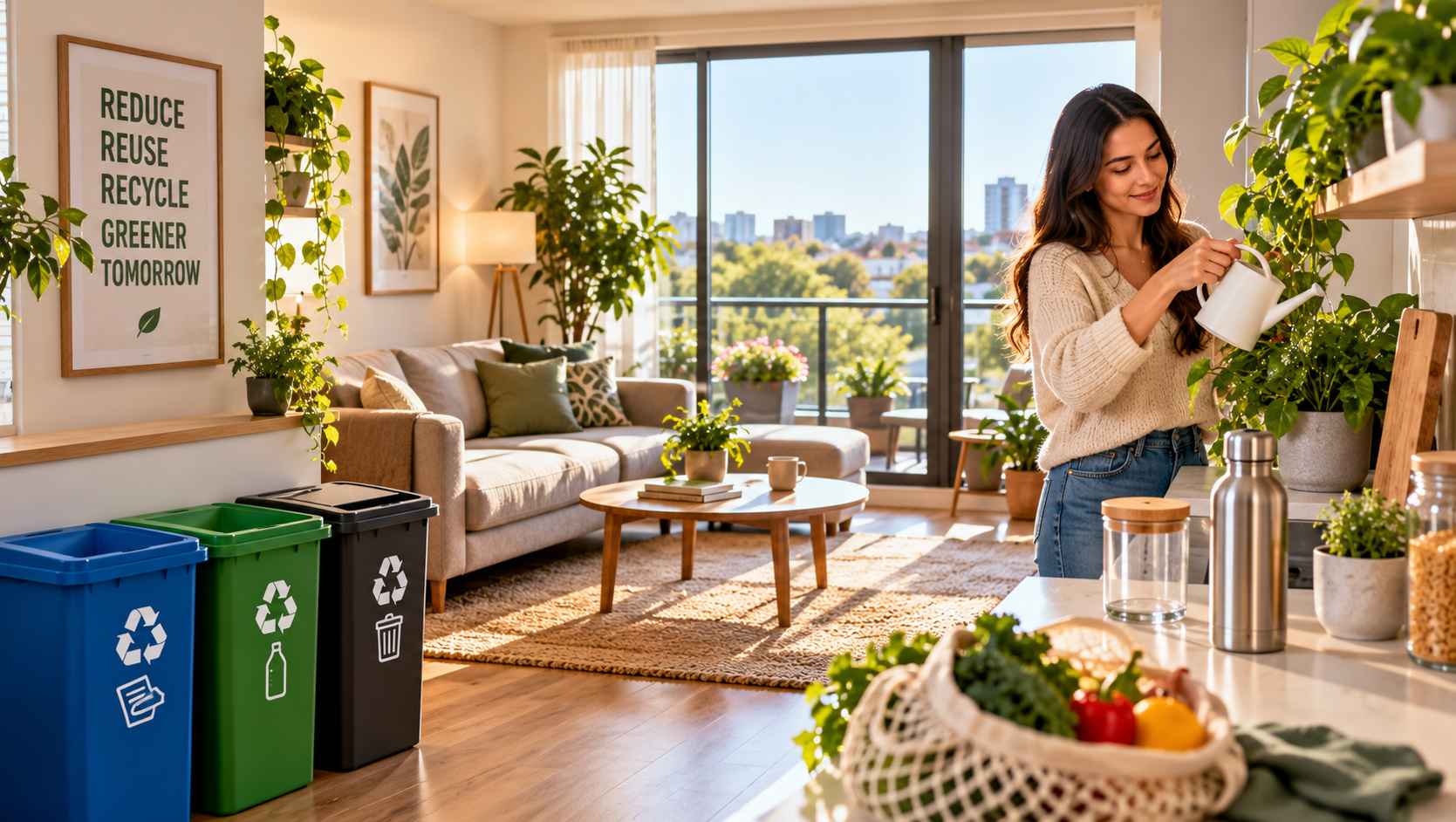
Sustainable living in an apartment does not require major renovations, expensive technology, or complete control over the building. Much of it comes down to everyday decisions: how much energy and water you use, what you buy, what you throw away, and how you move around your community.
Renters may not be able to replace windows, upgrade insulation, or change a building’s heating system, but they can still make thoughtful choices within the space they control. Small habits can also become easier to maintain when they are built into normal routines rather than treated as occasional projects.
Start With Everyday Energy Use
One of the simplest places for renters to begin is with electricity use.
Lights are an obvious starting point. Turn them off when rooms are empty and make use of natural light when practical. Where the lease and existing fixtures allow it, energy-efficient bulbs can also be a straightforward household upgrade.
The same principle applies to electronics. Televisions, computers, gaming equipment, chargers, speakers, and other devices can consume electricity even when they are not being actively used, depending on their settings and design.
Instead of worrying about every individual device, create a simple routine. For example, entertainment equipment can be switched off at the end of the evening, while chargers can be unplugged when they are no longer needed.
The objective is not to make the apartment inconvenient to live in. It is to avoid using energy simply because a device or light has been left running out of habit.
Use Heating and Cooling Thoughtfully
Heating and cooling can have a significant effect on household energy use, but renters often have limited control over the building’s overall system.
That makes reasonable personal habits particularly useful.
Keep windows and exterior doors closed when heating or cooling is operating, unless ventilation or fresh air is intentionally needed. Avoid blocking heating vents or radiators with furniture where doing so could interfere with normal airflow.
If your apartment has an adjustable thermostat, use settings that are comfortable without unnecessarily heating or cooling an empty home. If the building controls temperature centrally, residents can still communicate concerns about unusual temperatures or equipment problems to the appropriate property-management contact.
It is also worth remembering that energy-conscious living should not come at the expense of health or reasonable comfort. The goal is thoughtful use, not extreme temperature changes.
Reduce Water Waste
Water conservation can be just as practical in an apartment as in a detached house.
Start by paying attention to habits. Do not leave the tap running unnecessarily while brushing your teeth, washing dishes, or completing other everyday tasks.
Showers can also be a place to reduce unnecessary water use without making the routine complicated. Fixing a dripping tap or reporting a running toilet is another important step.
Renters should not assume that every maintenance problem is something they need to repair themselves. Plumbing work can require appropriate knowledge and, depending on the situation, professional attention.
If you notice a persistent leak or unusual water use, report it through the appropriate building-maintenance process. Prompt communication allows the issue to be assessed rather than allowing a small problem to continue unnoticed.
Make Recycling Part of the Routine
Recycling works best when it becomes an ordinary household habit rather than something that requires a major effort every few weeks.
Keep recycling containers convenient and learn the collection rules that apply to your building or municipality. Local programmes can differ, so avoid assuming that an item belongs in a particular bin simply because it is made from a recyclable material.
When in doubt, check the current local guidance.
It is also useful to reduce the amount of waste entering the home in the first place. Choosing products with less packaging, buying reusable versions of frequently used items, and avoiding unnecessary disposable products can reduce the amount of material that needs to be sorted or discarded.
Cut Down on Food Waste
Food waste is another area where renters can make practical changes without altering their homes.
Plan meals around food that is already available before buying more. Keep an eye on items approaching their best-before dates and use appropriate storage methods to help food remain useful for longer.
Buying smaller quantities can sometimes make sense when a household regularly struggles to finish larger packages.
Freezing suitable foods can also help avoid waste when you know something will not be eaten soon.
These habits have an additional benefit: they can make grocery spending easier to manage because fewer purchases end up unused.
Choose Household Items With a Longer Life
Sustainable living is not only about what happens after an item is used. It also involves thinking about what comes into the apartment in the first place.
Before buying something new, ask whether it solves a genuine need.
For furniture, kitchen equipment, storage products, clothing, and household accessories, consider durability and usefulness rather than simply choosing the cheapest or newest option.
Second-hand furniture can sometimes be a practical choice for renters, particularly when moving into a temporary home or furnishing a space gradually.
The same principle applies to décor. A home does not need to be constantly refreshed to feel comfortable. Choosing pieces that remain useful and appealing over time can reduce unnecessary purchasing.
Consider How You Travel
Transportation choices are another part of sustainable everyday living.
Where practical, walking, cycling, public transit, or combining several errands into one trip can reduce the need for individual car journeys.
The right option depends on where you live, your schedule, weather conditions, accessibility needs, and the services available in your area.
For apartment renters, location can play an important role. A home located conveniently for work, groceries, transit, parks, and other regular activities may make lower-impact transportation choices easier to incorporate into daily routines.
There is no single correct approach. The useful question is which transportation habits realistically fit your life.
Use Shared Building Resources Thoughtfully
Apartment living often means sharing resources with other residents.
Laundry rooms, recycling areas, parking facilities, elevators, outdoor spaces, and other common amenities are part of the broader residential environment.
Using these spaces thoughtfully can make them more efficient and pleasant for everyone.
For example, running appropriately sized laundry loads avoids unnecessary cycles, while keeping shared recycling and waste areas organised helps prevent avoidable contamination or overflow.
Residents can also contribute by reporting maintenance concerns rather than ignoring them. A leaking fixture, malfunctioning light, or other building issue may not be something a renter is authorised or qualified to fix independently.
For residents comparing professionally managed housing, rental communities from Osgoode Properties can be one example of the broader category of rental living where communication between residents and property management is part of the day-to-day experience. The important point for any renter is to understand how to report concerns and which changes require permission.
Know What You Can Change
One of the biggest differences between renting and owning is control over the property.
Renters can usually make many everyday lifestyle choices themselves, but structural alterations, permanent fixtures, electrical changes, plumbing modifications, or other significant work may require permission or professional involvement.
Before making a change, check the lease or ask property management if you are unsure.
This is particularly important for upgrades such as replacing fixtures, installing equipment, painting, mounting heavier objects, or making changes that could affect walls, plumbing, electrical systems, or building finishes.
A sustainable idea is only useful if it is appropriate for the property and permitted under the rental arrangement.
Choose Technology That Reduces Complexity
Technology can help renters use resources more thoughtfully, but more devices do not automatically mean a more sustainable home.
Simple timers, programmable settings, or efficient appliances can sometimes make routines easier. However, buying new connected products solely because they are marketed as “smart” may not be necessary.
Start with the behaviour you want to improve.
If the problem is forgetting to turn lights off, a simple routine may be enough. If a household repeatedly leaves certain equipment running, an appropriate automated setting might help. If neither option provides a meaningful benefit, there may be no reason to add another device.
The most useful technology is often the technology that solves a specific problem without creating unnecessary consumption or complexity.
Reduce Clutter Before Buying More Storage
Decluttering can also support more sustainable consumption.
When an apartment becomes crowded with unused clothing, furniture, kitchen equipment, electronics, and miscellaneous items, the natural response can be to buy more storage.
Before doing that, look at what is actually being used.
Donate, sell, recycle, or responsibly dispose of items that no longer have a purpose where appropriate. Then consider whether the remaining belongings can be organised more efficiently.
This approach can make the apartment easier to maintain while also reducing the temptation to purchase more things simply to accommodate items that are rarely used.
Build Habits That Are Easy to Keep
Sustainable apartment living works best when it fits naturally into everyday life.
You do not need to change everything at once. Choose a few habits that are realistic for your household, such as turning off unused lights, reducing food waste, using reusable products, reporting leaks promptly, or choosing lower-impact transportation when convenient.
Once those habits become routine, consider adding another.
Renters also benefit from remembering that sustainability is not solely an individual responsibility. Building design, heating systems, appliances, waste programmes, transportation infrastructure, and property-management practices all influence environmental performance.
What residents can do is make thoughtful choices within their control and communicate useful maintenance concerns when they arise.
Make Sustainable Living the Easier Choice
A sustainable rental lifestyle does not need to be complicated.
The strongest changes are often the ones that require little extra effort: buying only what is needed, using energy and water thoughtfully, reducing waste, taking advantage of practical transportation options, and looking after shared spaces.
Renters may have less control over a property than homeowners, but they still have considerable influence over how they use their home and the resources around them.
By turning a handful of sensible choices into regular habits, apartment living can become more efficient, less wasteful, and easier to maintain without requiring major changes to the home itself.